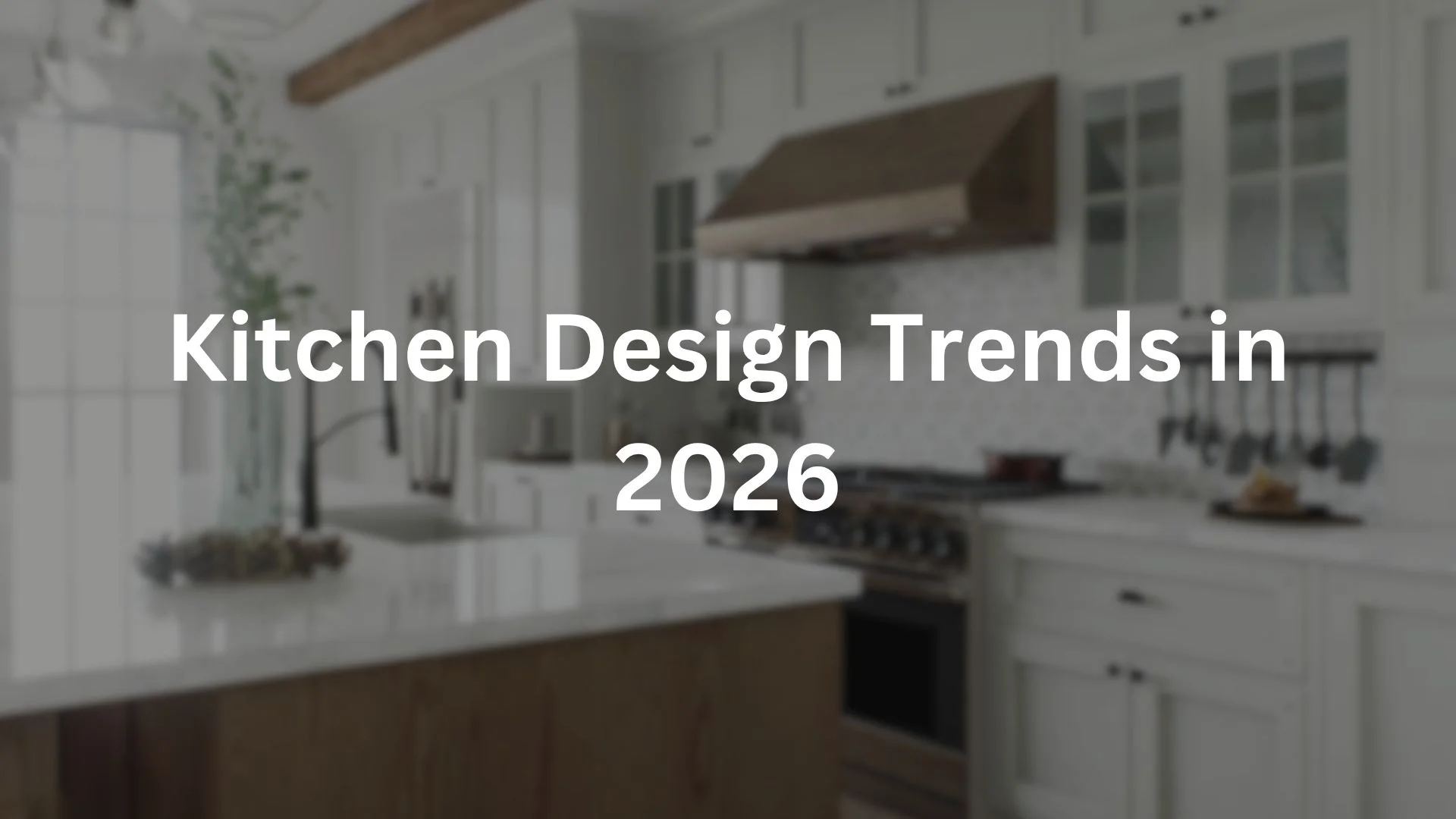
The last decade belonged to grey. Cool, handleless, minimal, and in a great many homes, slightly cold.That has shifted decisively. The most influential change in 2026 is a move towards natural materials, with earthy toned, visibly textured timber replacing the white, monolithic cabinetry of previous years. Cool greys and bright whites are giving way to creams, mushroom shades and taupes, often layered with muted greens and browns.
What follows is a look at the trends that are genuinely shaping kitchens this year, what each one costs to do, and an honest view of which will still look right in a decade. Written from over 20 years of building kitchens across Jersey, where a good many of these ideas have to work in granite cottages rather than show homes.
The trends at a glance
| Trend | Cost to implement | Likely to last? |
| Warm neutral palettes | Low | Yes |
| Confident colour | Low | Depends on the shade |
| Natural wood and visible grain | Moderate to high | Yes |
| Curved and softened forms | High | Uncertain |
| Statement stone surfaces | High | Yes, in moderation |
| Larders and hidden storage | Moderate | Yes |
| Concealed appliances | Moderate | Yes |
| Micro shaker doors | Low | Yes |
| Brass and bronze hardware | Low | Probably |
| Unfitted and freestanding elements | Varies | Uncertain |
Warm neutrals replacing grey
The defining shift, and the one underpinning most of the others.
Creamy neutrals, sandy beiges, soft olive greens, clay tones and earthy neutrals are rising in popularity, with the stark white kitchen receding alongside grey. Brands have expanded palettes to include soft mushroom and earthy latte finishes.
Cost: low. If you are already having cabinetry sprayed, a warm neutral costs exactly the same as a cool one. This is the cheapest trend on the list to adopt.
Will it last? Probably, and for a practical reason rather than an aesthetic one. Warm neutrals are forgiving. They work with timber, with stone, with brass and with almost any flooring, which means the rest of the room can change around them. Grey was popular for a decade for the same reason, and warm neutrals are its natural successor rather than a reaction against it.
Colour, used with more confidence
Alongside the neutrals, a genuine appetite for colour.
The 2026 UK Houzz Kitchen Trends Study found blue to be the most popular cabinetry colour among renovating homeowners at 18 percent, closely followed by green at 17 percent. Deep shades of red and burgundy are also appearing in kitchens, and golden yellows are emerging as an accent colour.
There has been an increase in homeowners looking to be more expressive and less safe with their interiors, though the same sources note that neutrals still dominate overall.
Cost: low, for the same reason as above. Colour is a spraying decision, not a construction one.
Will it last? Blues and greens, particularly muted and earthy versions, have a long history in kitchens and tend to age gracefully. Burgundy and strong yellows are a bigger commitment, and are the shades most likely to feel dated in eight years.
The practical point that defuses this: a sprayed bespoke kitchen can be taken back to the workshop and re-sprayed in a different colour for roughly a tenth of the cost of replacement. That makes a bold colour a far less permanent decision than it feels at the point of choosing it, and it is worth knowing before you talk yourself into beige you do not actually want.
Natural wood and visible grain
Timber is back as a surface to be seen rather than painted over. Warm oak, walnut, and wood with visible grain are adding texture and intimacy, frequently used alongside painted cabinetry rather than throughout.
The layered approach is characteristic of this year. Rather than one uniform finish across a space, designers are layering different surfaces to create depth.
Cost: moderate to high. Solid timber and veneered board both cost more than painted MDF, and solid timber in particular needs to be detailed to allow for seasonal movement.
Will it last? Yes. Visible timber has never really gone away, and a kitchen combining painted cabinetry with a timber island or open shelving is a combination that has worked for decades.
One technical caution: timber moves with humidity, which matters more in a coastal property than inland. Solid timber elements need to be designed to accommodate that rather than fixed rigidly, and anything painted is better in MDF, since paint is a rigid film and will crack where timber beneath it moves.
Curved and softened forms
A clear shift for 2026 is the move away from boxy, linear kitchen furniture towards softer, rounded forms. Curved islands and rounded cabinetry are being used to enhance movement and create a more welcoming atmosphere.
Cost: high, and this is the trend where the gap between a magazine image and a quote is widest. Curves take disproportionately longer to set out and build. A curved island front is usually made by laminating layers of board around a former, which is skilled work. A curved end panel on a run of units is a made piece rather than a cut one.
Expect curved elements to add meaningfully to a cabinetry quote, and more in a bespoke kitchen than a modular one, because every curve is a one-off.
Will it last? Harder to say. Softened edges and rounded island ends are likely to age fine. Heavily sculptural, fully curved cabinetry is a stronger statement and carries more risk, particularly because it is the element you cannot change later without remaking it.
A middle route: a single curved element, such as a rounded island end or a curved breakfast bar, gives most of the effect at a fraction of the cost and commitment of curves throughout.
Statement stone
Dramatic stone surfaces with rich veining are returning strongly, including waterfall islands and splashbacks that run from worktop to wall. Stone is playing a more architectural role in kitchen design.
Cost: high, and the detail is where it escalates. A waterfall end, where the material runs down the side of an island to the floor, commonly adds £800 to £2,000 per end. A full-height splashback in the same material as the worktop costs considerably more than tile or paint.
Will it last? Stone itself, yes. Heavily veined, dramatic stone is more of a statement and more divisive, so a quieter stone is the safer long-term choice if you are uncertain.
One thing to check: quartz is not heatproof, despite being stone-based, because the resin binder scorches under a hot pan. Granite and sintered stone are the genuinely heat-resistant options. Worth knowing before you commit to a dramatic quartz if you cook seriously.
Larders, pantries and hidden storage
Not a visual trend at all, which is probably why it is the most durable one on the list.
The 2026 UK Houzz Kitchen Trends Study found that 82 percent of homeowners undertaking kitchen renovations were incorporating specialist built-in features.
The thinking behind it: a kitchen that looks calm is a kitchen where the clutter has somewhere to go. Larder cupboards, appliance garages with a socket inside, dedicated recycling, and internal fittings sized for what you actually own.
Cost: moderate. A bespoke pantry with internal fittings typically runs £2,500 to £5,000. An appliance cupboard is far cheaper and is arguably the single most useful thing on this list, because it gets the stand mixer, air fryer and food processor off the prep worktop where they otherwise live permanently.
Will it last? Yes. This is a functional improvement rather than a look, and functional improvements do not date.
Concealed appliances and seamless technology
Modern kitchens are moving away from flaunting technology towards making it invisible, with integrated appliances, hidden storage and concealed systems now standard rather than luxury. Handleless kitchens remain strong, with integrated appliances, push-to-open doors and matching cabinetry fronts for fridges and dishwashers.
Cost: moderate. Integrated appliances cost more than freestanding equivalents, and each one needs a door front made in the same finish as the rest of the kitchen, which is an additional made item.
Will it last? Integration, yes. Specific technology, less so. Be cautious about anything with a screen built into a cabinet door, since the screen will be obsolete long before the cabinet is.
Micro shaker doors
Instead of stark handleless schemes, micro shaker and super micro shaker doors are gaining ground, meaning a shaker frame with a much narrower stile and rail than the traditional version.
It sits between minimalism and traditional detail, which is why it suits so many rooms. It gives a shadow line and a sense of craft without the heavier look of a full shaker.
Cost: low. A micro shaker costs broadly what a standard shaker costs, and less than a detailed traditional profile.
Will it last? Likely yes. Shaker in various proportions has been in continuous use for a very long time.
Brass and bronze hardware
Brushed brass and unlacquered bronze hardware have overtaken chrome as the metal finish of choice.
Cost: low, and importantly, reversible. Handles are the cheapest thing in a kitchen to change.
Will it last? Unknown, and it does not matter much. Unlacquered brass develops a patina over time, which some people love and others find untidy. If you are uncertain, lacquered brass holds its finish.
Unfitted and freestanding elements
Oversized, counter-height worktable islands that are more utilitarian than precious are being highlighted as the island of choice, alongside unfitted kitchens and freestanding storage pieces that feel collected over time rather than built in a day.
Cost: varies enormously, from genuinely cheap if you buy second-hand pieces to expensive if a freestanding dresser is made bespoke.
Will it last? This one carries a practical warning rather than an aesthetic one. Freestanding pieces leave gaps at the sides and do not use the full ceiling height, which is exactly the storage inefficiency fitted furniture exists to solve. In a large kitchen with space to spare, that is a fair trade for the look. In a small or awkward room, it costs you storage you will miss.
Trends in an older property
Most trend coverage assumes a square modern room. A fair proportion of Jersey’s housing stock is nothing of the sort, and some of these ideas translate better than others.
What works well in granite cottages, farmhouses and converted outbuildings:
- Warm neutrals and earthy colours, which sit comfortably with stone, exposed beams and older flooring in a way cool grey never quite did
- Natural timber, for the same reason
- Larders and hidden storage, which suit buildings that were designed with pantries in the first place
- Micro shaker, which reads as appropriate in a period room without pretending to be reproduction
What needs care:
- Curves, which can fight with the geometry of an older room rather than soften it
- Handleless and fully minimal schemes, which tend to look out of place against rubble walls and irregular surfaces
- Full-height stone splashbacks, which are difficult to fit cleanly against a wall that varies in flatness along its length
The underlying point: in a building where nothing is straight, every trend has to be executed as made-to-fit work rather than standard units. End panels get scribed to follow the wall’s actual profile, carcasses are levelled independently and the plinth cut to follow the floor line. Done that way, almost any of these ideas can work. Done with standard units and filler panels, the same idea looks like something imposed on the room.
Which trends to actually act on
If you are renovating now and want a kitchen that still looks right in ten years:
Safe to commit to permanently: warm neutral or muted colour cabinetry, micro shaker or simple door profiles, larders and hidden storage, integrated appliances, good quality natural timber elements.
Commit with thought: strongly veined statement stone, bold colours such as burgundy, curved cabinetry.
Keep changeable: hardware, splashback, flooring, accessories, lighting fittings. These are where personality belongs, because they are the things you can alter in an afternoon.
The broader direction this year is warmer, more tactile and more thoughtfully crafted, which is less a trend than a correction. Spend on the layout, the construction and the storage, keep the permanent surfaces calm, and let the trends live in the things that are easy to change.
Frequently asked questions
What is the biggest kitchen trend in 2026?
The move away from cool greys and stark whites towards warm, earthy neutrals, with natural timber and visible grain returning alongside them. Almost every other trend this year follows from that shift.
Are grey kitchens out of date?
They are no longer current, though a well-made grey kitchen is not suddenly unusable. If you have one and like it, the cheapest update is hardware and a splashback rather than replacement. A sprayed bespoke kitchen can also be re-sprayed in a warmer colour for roughly a tenth of replacement cost.
Which kitchen trends are expensive to implement?
Curved cabinetry and statement stone details are the costliest, since curves take far longer to build and features like waterfall island ends and full-height stone splashbacks are priced per piece. Colour and warm neutrals cost nothing extra if the kitchen is being sprayed anyway.
Which 2026 trends will date fastest?
Strongly veined dramatic stone, bold shades such as burgundy, and heavily sculptural curved cabinetry carry the most risk, mainly because they are permanent elements. Hardware trends matter less, because handles are cheap to change.
Do trend colours work in older properties?
Warm neutrals and earthy colours generally work better in period and stone buildings than the cool greys they replaced, because they sit comfortably with timber, stone and older flooring. Fully minimal handleless schemes tend to sit less well.
Should I follow trends at all in a kitchen?
In the elements that are easy to change, yes. In the permanent ones, follow function instead. A sensible layout, good construction and well-planned storage will outlast every trend on this list, and they are what you will actually notice daily.
Getting started
The most useful first conversation covers how you use the room rather than what you have seen online. Trends are worth knowing about, but a kitchen designed around how you cook, with the awkward parts of the building properly solved, will outlive any of them.
Davision Interiors Ltd has designed, built, finished and installed kitchens across all parishes of Jersey for over 20 years, handling full renovations from strip-out to snagging, supplying worktops alongside the cabinetry, with spray finishing and French polishing carried out in house. Any colour can be matched, and a sprayed kitchen can be refinished years later rather than replaced. Every project starts with a free design and survey visit, all work is covered by our workmanship guarantee, and we are fully insured. Get in touch to arrange a visit and a no-obligation quote.